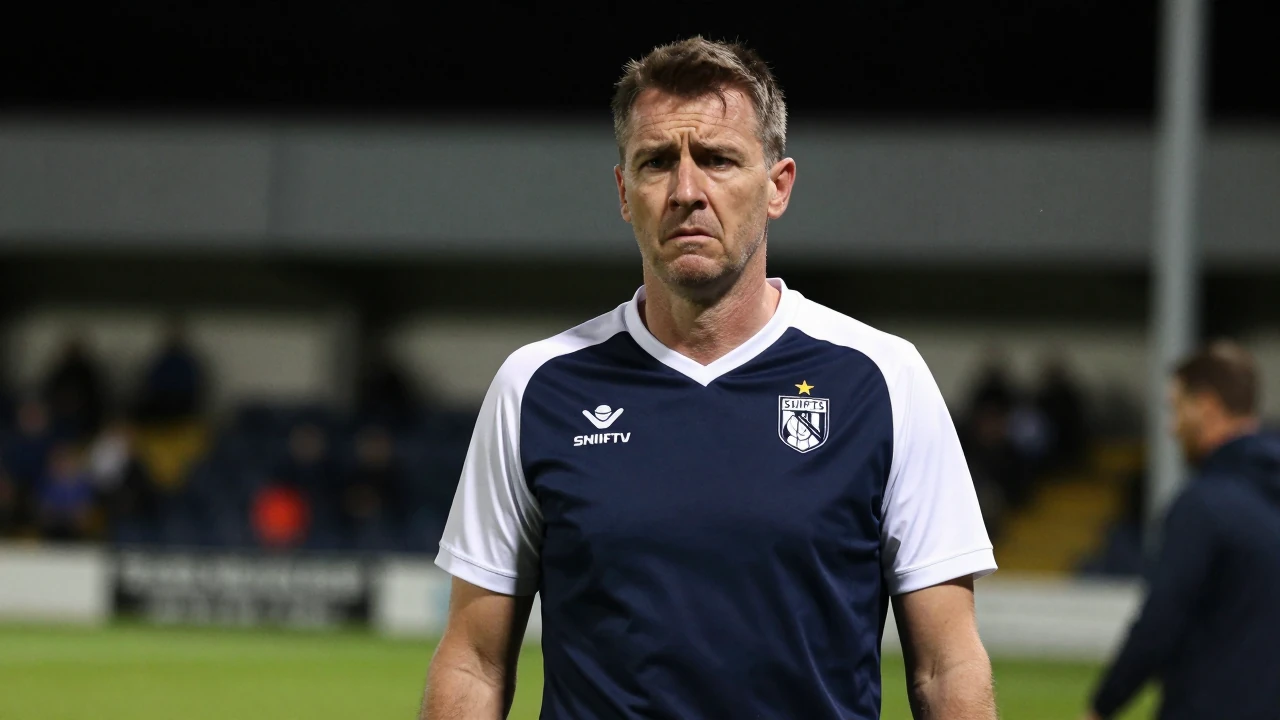

Tactical Assessment of Dungannon Swifts' Recent Form
As Dungannon Swifts continue to navigate the ups and downs of the Northern Ireland Premiership, it's clear that their recent form has been a mix of promise and frustration. The Swifts have displayed flashes of brilliance, but inconsistencies in key areas have held them back from achieving their potential. A thorough tactical analysis reveals several adjustments that could help the team maximize their strengths and shore up weaknesses.
Current Tactical Setup
Dungannon Swifts have primarily deployed a 4-2-3-1 formation, which has allowed them to maintain solid defensive structures while providing support to the attacking front. This setup has seen the likes of Leonel Alves and D. Dunne operating in advanced roles, aiming to link up with the striker while also contributing defensively. However, the team often struggles to transition effectively from defense to attack, leading to missed opportunities and a lack of cohesion in the final third.
Suggested Tactical Tweaks
1. Fluidity in Midfield: One of the key areas where Dungannon Swifts can improve is in their midfield dynamics. Currently, the double pivot often appears static, which can stifle creative play. Introducing more fluidity by allowing one of the central midfielders to drift forward and join the attack could create overloads in advanced positions. This movement not only provides additional passing options but also disrupts the opposition's defensive structure.
2. Wider Play: The Swifts have tended to funnel their attacks through the middle, which can become predictable. By encouraging the full-backs to overlap and stretch the play wide, particularly on the flanks, the team can exploit the space left by opposing defenders. This strategy could create more crossing opportunities and pull defenders out of position, allowing more space for the attacking midfielders and strikers.
3. Pressing Strategy: Dungannon has shown glimpses of effective pressing, particularly in matches where they have started quickly. Increasing the intensity of their pressing game could force opponents into mistakes and regain possession higher up the pitch. Implementing a coordinated pressing system, where players work in unison to close down space and limit passing options, could lead to more goal-scoring chances.
4. Substitution Patterns: Another tactical tweak involves optimizing substitution patterns. The current approach often results in reactive changes rather than proactive adjustments. By planning substitutions that introduce fresh legs to maintain intensity, especially in the latter stages of matches, the team can sustain pressure and capitalize on tiring opponents. This could be particularly effective against teams that sit deep later in the game.
Conclusion
As the Dungannon Swifts look to build on their recent performances, these tactical adjustments could be pivotal in increasing their competitiveness in the league. By refining their midfield fluidity, utilizing wider play, implementing a more aggressive pressing strategy, and optimizing substitution patterns, the Swifts can elevate their game and push for better results in the Northern Ireland Premiership. The potential is there; it’s all about unlocking it through thoughtful tactical refinements.